

Importance of Acid Resistant Floors
Acid resistant flooring installation is a crucial consideration for industries where chemical exposure, spills, and corrosive substances are part of everyday operations. Whether in chemical plants, laboratories, pharmaceutical facilities, or food processing units, acid resistant flooring installation ensures floors can withstand acidic and chemical damage, promoting safety, durability, and operational efficiency. Choosing the right flooring material and proper installation method can prevent costly repairs, downtime, and health hazards for employees.
Importance of Acid Resistant Flooring
Industries that handle corrosive chemicals or acidic substances face significant risks when floors are not properly protected. Ordinary concrete or tile surfaces can degrade rapidly, leading to cracks, surface erosion, and unsafe working conditions. Acid resistant flooring installation provides floors that are specifically designed to resist corrosion, chemical spills, and abrasion. Installing these floors not only extends the lifespan of industrial spaces but also helps ensure compliance with workplace safety standards.
Types of Acid Resistant Flooring
There are various materials used for acid resistant flooring installation, each with its unique advantages:
Epoxy Resin Flooring: Highly chemical-resistant, epoxy resin floors provide a seamless surface that is easy to clean and maintain. They are ideal for laboratories and chemical processing units.
Polyurethane Flooring: Known for flexibility and durability, polyurethane floors are resistant to many acids and provide excellent slip resistance, making them suitable for heavy-duty industrial environments.
Cementitious Flooring: Cement-based acid resistant flooring provides strong structural support and costs less, making it ideal for areas with moderate chemical exposure.
Vinyl or Rubber Flooring: These floors handle light chemical exposure and work well in laboratories and pharmaceutical facilities because they install easily and require minimal maintenance.
Steps for Professional Installation
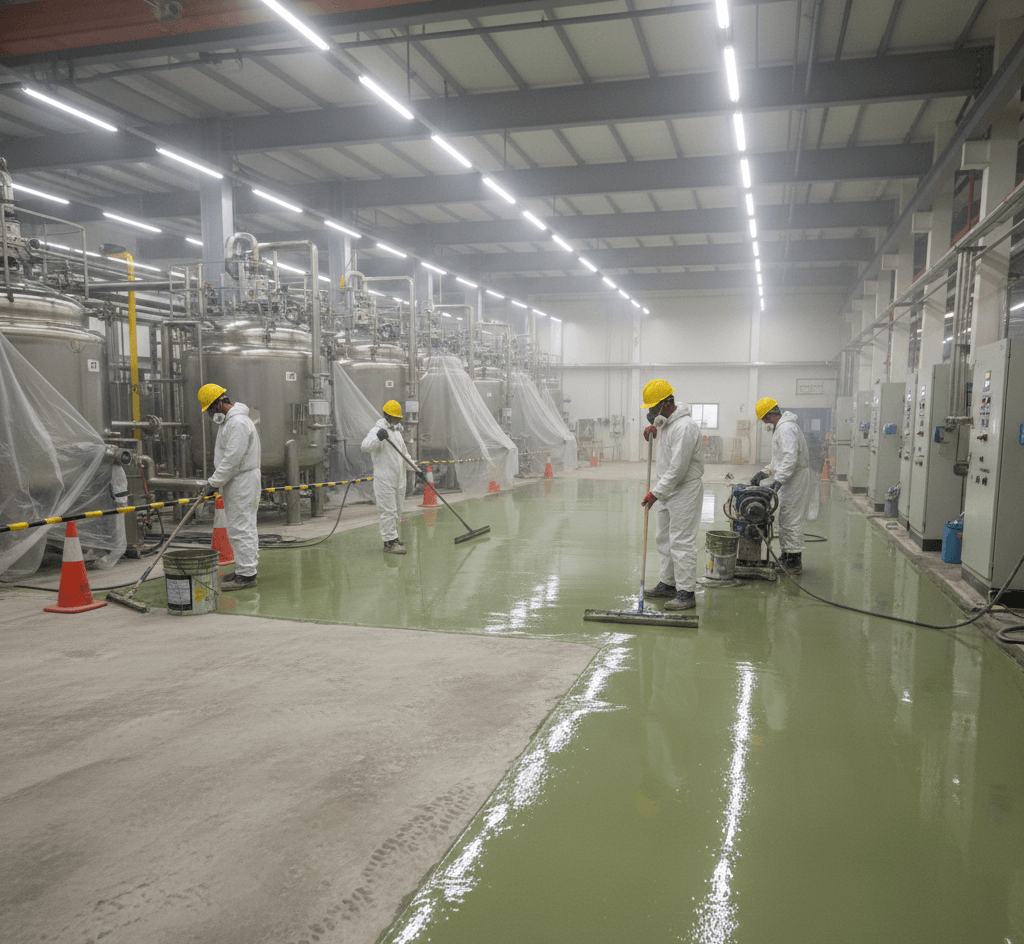
Acid resistant flooring installation requires careful planning and skilled execution. Following proper procedures ensures maximum protection and durability:
- Surface Preparation: Clean and level the existing floor. Remove dust, grease, or moisture. Repair cracks and uneven areas before installation.
- Primer Application: Apply a primer layer to improve adhesion between the existing floor and the acid resistant material.
- Floor Material Application: Apply layers of resin, cement, or polyurethane carefully to create a seamless surface. Cure the material properly to ensure chemical resistance.
- Finishing and Inspection: Finish the floor for smoothness and uniformity. Inspect the surface to confirm it meets durability and safety standards.
Maintenance Tips for Longevity
Even the best acid resistant floors require regular maintenance to ensure long-term performance. Routine cleaning with pH-neutral detergents, immediate neutralization of spills, and periodic inspections for surface damage are essential. Avoiding harsh scrubbing tools or strong alkalis can prevent premature wear. By following these practices, businesses can maximize the lifespan of their acid resistant flooring.
Benefits of Investing in Acid Resistant Flooring
Investing in acid resistant flooring installation offers several advantages:
Enhanced Safety: Resistant to corrosion and chemical spills, these floors reduce the risk of accidents in the workplace.
Durability: With proper installation and maintenance, acid resistant floors can last decades, saving costs on frequent repairs or replacements.
Ease of Maintenance: Smooth and non-porous surfaces make cleaning simple and reduce bacterial growth in food or pharmaceutical environments.
Compliance with Standards: Many industries must adhere to strict health and safety regulations; acid resistant floors help achieve compliance efficiently.
Benefits of Acid Resistant Flooring
Acid resistant flooring installation is a strategic investment for industrial and commercial facilities exposed to chemical hazards. Selecting the right material, ensuring professional installation, and maintaining the floors properly can provide a durable, safe, and low-maintenance solution. Businesses benefit from improved operational efficiency, regulatory compliance, and a safer working environment by prioritizing acid resistant floors.